
Every year, hundreds of thousands of people look at Canada and ask the same question: can I build a career there? The country has an aging population, a long list of industries struggling to find workers, and a reputation for fair workplaces. It also has a complicated immigration system that changes often, and many applicants fail because they follow outdated advice.
This guide explains how the Canadian job market works, which sectors are hiring, the main ways foreign workers get in, how to avoid scams, and the steps to take. It is written for ordinary job seekers, not lawyers, and every section points you to an official source for the final word.
Why Canada Needs Workers
Canada’s population is aging, and fewer young people are entering the workforce than retiring from it. Immigration now drives most of the country’s labour force growth. Employers in healthcare, construction, trucking, farming and technology regularly report positions they cannot fill locally.
That demand is real, but it is not unlimited. Canada has been tightening parts of its system, especially for temporary and lower-wage hiring, while giving priority to skilled workers in specific fields. Knowing which side of that line your occupation falls on matters more than almost anything else.
The Sectors Hiring Most
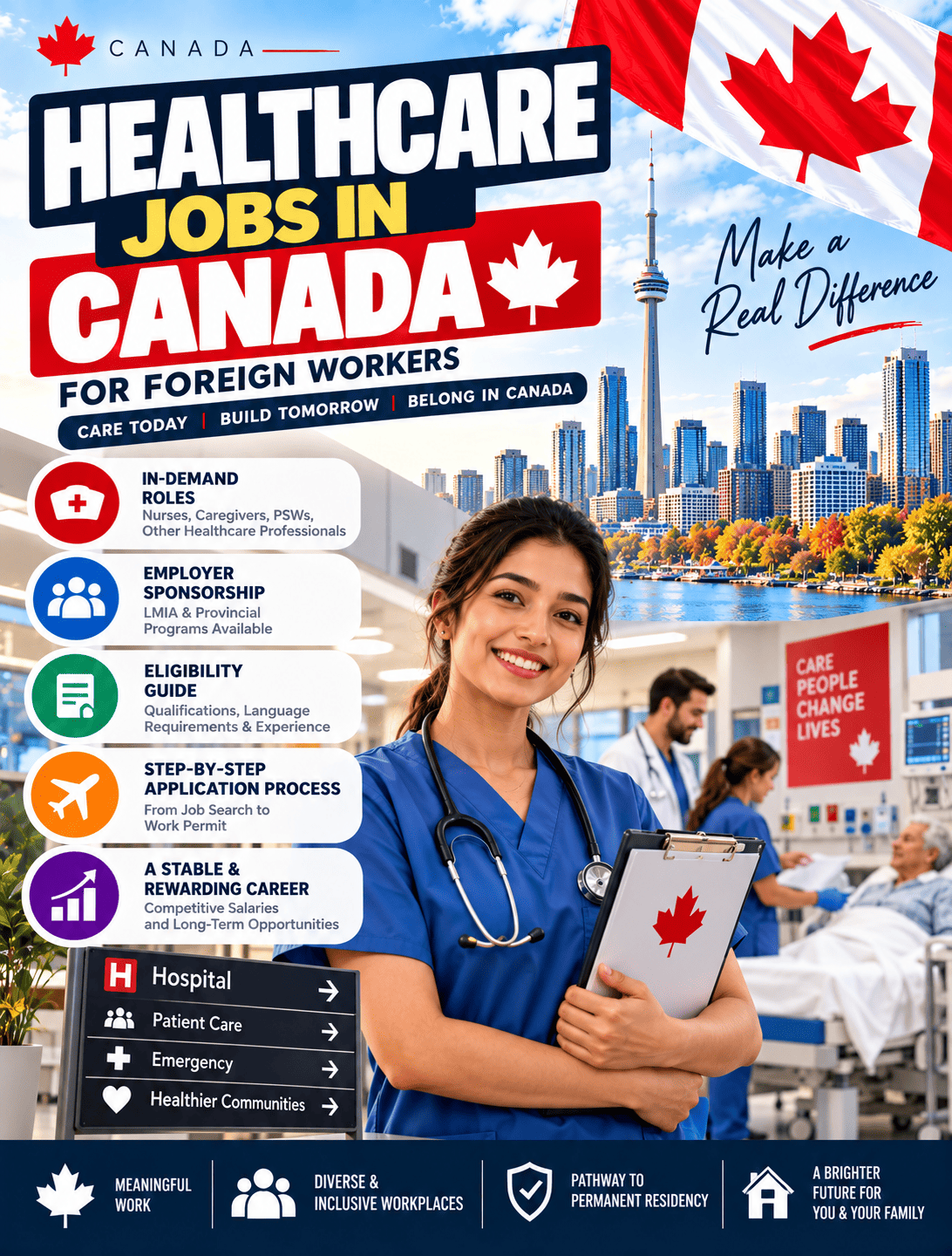
Healthcare and social services. Nurses, personal support workers, medical lab technologists, paramedics, pharmacists and physicians remain at the top of every provincial shortage list. Canada has also created an Express Entry category for physicians with Canadian work experience, a sign of how seriously it takes the gap.
Skilled trades and construction. Electricians, plumbers, welders, carpenters, heavy equipment operators and HVAC technicians are in demand, driven by housing and infrastructure projects. Canada ran a category-based Express Entry draw for trades occupations in April 2026, which shows the government is actively inviting these workers.
Technology and engineering. Software developers, data engineers, cybersecurity specialists and civil and electrical engineers are valued, though the tech market is more competitive than a few years ago. Strong experience and good English or French matter more than a degree alone.
Education. Teachers and early childhood educators have been added to priority lists because many provinces are short of staff.
Transport. Truck drivers, and in 2026 pilots, aircraft mechanics and inspectors, are recognized as shortage areas.
Agriculture and food processing. Farms, greenhouses and processing plants rely heavily on seasonal and temporary workers, though the rules around these programs have become stricter.
Priority lists change from year to year, so always check the current IRCC list before building a plan around one occupation.
How Foreign Workers Get Jobs in Canada
There is no single “Canada work visa.” These are the main routes.
1. Express Entry (permanent residence)
Express Entry is the main system for skilled workers who want permanent residence. It manages three programs: the Federal Skilled Worker Program, the Federal Skilled Trades Program and the Canadian Experience Class. Candidates build an online profile and receive a Comprehensive Ranking System (CRS) score based on age, education, language ability, work experience and other factors. The government then invites the highest scorers to apply.
The biggest shift in recent years is category-based selection. Instead of inviting only the highest scores, Canada continues to invite candidates with strong French skills and experience in priority sectors, and in 2026 added new categories such as transport occupations. If your work history matches a category, you may be invited at a lower score than the general draws require. eiglaw
The exact work experience needed for category draws has been described differently by different sources, so confirm the current rule on the official IRCC website before you rely on it.
2. Provincial Nominee Programs (PNPs)
Each province and territory runs its own immigration streams, designed around its own labour needs. A nomination adds a large number of points to an Express Entry profile or leads to a separate permanent residence application. Smaller provinces often target workers in specific occupations and may be more welcoming to candidates with lower CRS scores. Research each province’s list of target occupations, since they differ widely.
3. Employer-sponsored work permits (LMIA)
A Labour Market Impact Assessment (LMIA) is a document an employer obtains to show that no suitable Canadian or permanent resident was available for the job. If it is approved, a foreign worker can apply for a work permit tied to that employer.
Under the Temporary Foreign Worker Program, there are two streams, and the rules differ sharply:
- High-wage stream: For jobs paying above the provincial threshold.
- Low-wage stream: For jobs paying below it, with tighter limits.
Several rules matter for job seekers. In July 2026, Canada raised the wage threshold separating the two streams to 120% of the provincial median hourly wage. Employers in the low-wage stream are generally limited to 10% of a worksite’s workforce, although a temporary measure allows rural employers to go up to 15% until March 2027. Low-wage applications are also not processed in cities where the unemployment rate is 6% or higher, and the list of affected cities is updated every quarter. Low-wage employers must also offer suitable, affordable housing and cover round-trip transportation costs. canada raises tfwp wage thresholds for low wage stream +4
The practical lesson is that low-wage LMIA jobs are harder to find than they were a few years ago, and the list of eligible cities changes. High-skilled and specialized roles remain the stronger path.
4. Open work permits
Some people can work for any employer. This includes graduates of eligible Canadian schools, who may receive a Post-Graduation Work Permit, and certain spouses and partners of skilled workers or students. These permits give flexibility, but eligibility rules have been tightened recently, so check the current conditions.
5. Study first, then work
Many people enter through a Canadian college or university program, work part-time while studying, and then use Canadian experience to qualify for permanent residence. This route is expensive and has become more restricted with caps on student permits, so treat it as a serious financial decision rather than a shortcut.
Salaries: What to Expect
Pay in Canada varies by province, city and employer. As a rough guide, which you should check against the government’s Job Bank wage tool for your exact occupation and region:
| Occupation | Typical annual range (CAD) |
|---|---|
| Personal support worker | $38,000 to $55,000 |
| Truck driver | $50,000 to $80,000 |
| Electrician | $60,000 to $95,000 |
| Registered nurse | $75,000 to $105,000 |
| Software developer | $70,000 to $120,000 |
Also remember cost of living. Toronto and Vancouver pay more but rent is far higher than in Winnipeg, Halifax, Saskatoon or Moncton. A smaller city can leave you with more savings even at a lower salary.
Regulated Professions: Check Before You Move
Some jobs cannot be done in Canada without a license from a provincial regulator, including nurses, doctors, engineers, electricians, teachers and lawyers. Foreign credentials usually need to be assessed, and you may need exams or supervised work before you can practice under your professional title.
This catches many people off guard. A qualified doctor or engineer can arrive and spend years working outside their field. Before you commit, find the regulatory body for your profession in your target province and read what it requires. An Educational Credential Assessment (ECA) from a designated organization is also required for many immigration programs.
Where to Search for Jobs
- Job Bank (jobbank.gc.ca): The federal government’s official site. It lists jobs, wages and outlooks, and it flags employers who are willing to hire foreign workers.
- Provincial job boards and immigration portals: Each province lists local openings and its own programs.
- LinkedIn and Indeed: Useful for professional and corporate roles.
- Company career pages: Large employers in healthcare, retail, logistics and construction post openings directly.
- Professional associations: Many run job boards and offer networking.
Writing a Canadian-Style Resume
Canadian employers expect a resume that is clean and focused:
- Keep it to one or two pages.
- Do not include a photo, date of birth, marital status or religion.
- Lead with a short summary, then work experience in reverse chronological order.
- Use numbers to show results, such as “reduced delivery time by 20%.”
- Tailor it to each job posting, since many employers use software that scans for matching keywords.
- Add a short cover letter explaining why you fit the role.
References are usually provided only when requested. Interviews often include behavioural questions that start with “Tell me about a time when…”, so practise answering with a real example, what you did and what happened.
Avoiding Job and Visa Scams
Canada’s job market attracts fraudsters. Protect yourself:
- No one can guarantee a job or visa. Anyone who does is lying.
- Employers cannot charge you to hire you. Under federal rules, workers should not pay fees for a job offer or an LMIA.
- Verify the employer. Check the company’s website, contact details and presence on Job Bank.
- Use only official government websites (ending in canada.ca or gc.ca) for forms and fees.
- Be careful with unlicensed agents. Only licensed immigration consultants (RCICs) and lawyers can represent you.
- Never send money to a personal account or pay in gift cards or cryptocurrency.
If a job offer arrives quickly with no interview, offers a high salary for little work, or asks for payment, treat it as a warning.
Common Mistakes to Avoid
- Relying on outdated blog posts or social media rumours about visas.
- Ignoring language scores. Strong English or French test results can raise your Express Entry score more than almost anything else.
- Applying only to big cities.
- Not checking whether your profession is regulated.
- Arriving without enough savings to cover several months of living costs.
A Simple Step-by-Step Plan
- Identify your occupation and find its NOC code on the official government site.
- Check whether it appears in current Express Entry categories or provincial priority lists.
- Take an approved English or French language test.
- Get your education assessed if required.
- Estimate your CRS score using the official calculator.
- Research regulatory requirements for your profession.
- Search for jobs on Job Bank and through employers that sponsor.
- Build an Express Entry profile or apply to a province.
- Save enough money for the move and the first few months.
- Review everything against the official IRCC website before paying fees.
Frequently Asked Questions
Can I get a job in Canada without experience?
It is difficult through immigration programs, which mostly favour skilled workers. Entry-level jobs exist for people already in Canada with the right to work.
Do I need a job offer to move to Canada?
Not always. Express Entry does not require a job offer, though one can add points. Many other work permits do require an employer.
Is IELTS required?
Most programs require approved English or French test results. Check which tests the program accepts.
How long does the process take?
It varies widely by program, from a few months to over a year. Check the official processing times page.
Which province is easiest to move to?
There is no universal answer. Smaller provinces often have more targeted programs, but your occupation and score decide your best option.
Final Thoughts
Canada offers real opportunities, particularly for skilled workers in healthcare, trades, technology, education and transport. But success comes from preparation: the right language score, a verified occupation, an understanding of licensing, and a cautious approach to agents and offers. Start with official sources, plan carefully, and be patient with a system that rewards people who do their homework.
Disclaimer: This article is for general information only and is not legal or immigration advice. Immigration rules change frequently. Always confirm current requirements on the official IRCC and Job Bank websites or with a licensed immigration professional before making decisions.



Hi, this is a comment.
To get started with moderating, editing, and deleting comments, please visit the Comments screen in the dashboard.
Commenter avatars come from Gravatar.